
Choosing the best material for bathroom countertops requires a mix of aesthetics, durability, upkeep, and cost. With so many alternatives available, it’s important to understand how each operates in a moisture-rich environment.
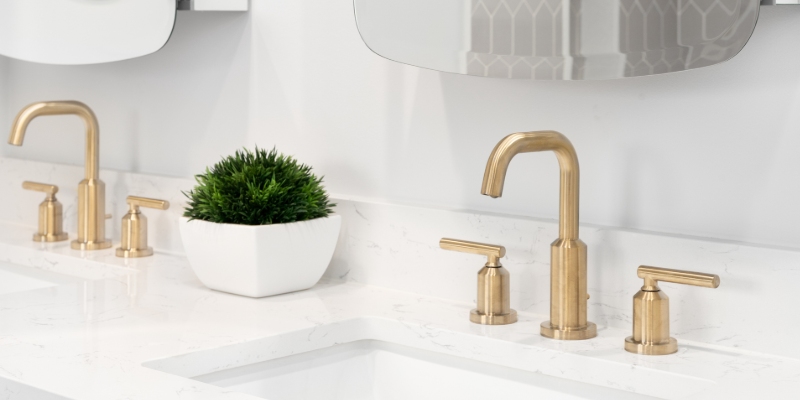
Here are just a few key materials you might consider for your bathroom countertops:
- Quartz: Quartz is made from natural stone and resin, making it non-porous and resistant to stains, mold, and bacteria. It also comes in a variety of colors and patterns, mimicking real stone without requiring the same maintenance needs. Quartz is an excellent choice for homeowners looking for little maintenance and uniformity in appearance.
- Granite: Granite provides a more natural and distinctive appearance. Each slab has a unique pattern, which can offer charm to a bathroom. It is extremely durable and heat-resistant, but because of its porous nature, it requires sealing to prevent stains and water damage. Still, it is a popular choice for those who prefer natural materials and don’t mind a little upkeep.
- Marble: Marble is frequently chosen for its elegant and ageless charm. Its gentle veining can improve the appearance of any bathroom, but it is more susceptible to scratches, stains, and etching from acidic materials.
- Solid Surface Bathroom Countertops: Solid surface materials, such as acrylic-based choices, offer a seamless appearance, integrated sinks, and quick repairability. They are less expensive than natural stone and reasonably easy to maintain, although they are more prone to scratches and heat damage.
- Laminate: Laminate is a low-cost option that has greatly improved in design. While not as durable as stone, it is versatile and easy to install, making it perfect for quick renovations or secondary bathrooms.